Sunday, March 10, 2024

Book Review: Elon Musk by Walter Isaacson

Definitely one of the best books I have ever read about one of the greatest minds to have ever walked on the face of the earth, and hopefully Mars someday.

Reading this book made me think there's no way that Musk can be human - like you and me, he too has only 24 hours in a day; but unlike you and me, he's currently running 6 companies - SpaceX, Tesla, Neuralink, The Boring Company, Twitter and X.AI.

And when Musk talks about running companies, it means he's actively and minutely involved in each & every process in each & every company. The guy knows pretty much everything about everything, is an avid reader, an addicted video games player, a memes lover, a doting father, passionate about wanting to save the world through his work be it electric cars, or providing Internet connectivity, implanting chips into human brains to assist the paralyzed, or send humans into space!

As the book details - Musk is a tough taskmaster. He's impatient, abrasive, sets impossible deadlines, has no sense of work life balance, expects people to work mostly all the time, doesn't tolerate fools, hates when people don't have ready answers to his questions. But he's also willing to listen to good ideas and is willing to change his mind when presented with hard facts.

The author asks whether Musk would be able to achieve all that he has - probably the only human in the world to do so at this point in time - if he weren't what he is. His childhood in South Africa has contributed to the way he grew up as an adult - willing to take risks, willing to fail but fail fast and recover and hit back at his detractors.

While most of his deadlines seemed crazy and unattainable when Musk uttered them, by pushing his team to achieve the impossible, he stood vindicated. His maxim is complacency will be the death of innovation and creativity. Keep hustling, keep trying seems to be his mantra.

Musk isn't without his dramas. In fact, as the author details throughout the book, Musk gets attracted to drama and a sense of urgency in his life. Without it, he feels listless. He needs stress to feel alive!

Reading this book while observing Musk's persona on Twitter has been fun - some of the times, his tweets make no sense or need someone to explain what he means; his rude responses to his former colleagues be it at OpenAI or Twitter are sometimes quite unnerving; his philosophical tweets about our civilization and life on Mars surely make one ponder.

I read this book almost breathlessly because I couldn't wait to find out what happens next. And now that I have finished the book, I feel a sense of emptiness - as if an enriching conversation with a very close friend has come to an end.

I heartily recommend this book to those who wish to find out what goes on in Musk's brain - what is he driven by; how does he manage to get up every single day and push his team to achieve the impossible!

Thursday, March 07, 2024

International Women's Day: How the Modi Govt. is revolutionizing the lives of women

On the 8th of March every year, one celebrates International Women’s Day. It is a day to appreciate and acknowledge women.

I thought it would be a good opportunity to list down 5 important schemes of the Narendra Modi Govt. ever since he took over as the Prime Minister (PM) in May’14.

In his first Independence Day speech as the PM, when Modi spoke about building toilets for women, it surprised quite a few and shocked a few others. However, what he spoke were not mere words. Since the launch of the Swachh Bharat Mission in Oct’14 till date, over 11 crore toilets have been built across all states/Union Territories.

That such a simple thing took so long to identify and build is something that most of struggle to even wrap our heads around. But that is exactly what Modi did. He looked at a few simple things and thought of ways to resolve them to ease the day-to-day lives of women. No wonder women are voting in higher numbers for Modi and the BJP.

Another scheme of the Modi Govt. is the Jal Jeevan Mission which was announced in Aug’19. As at date, ~75% of the rural households have been provided with tap water connections; 11 states & Union Territories have achieved 100% coverage in rural areas. Again such a simple thing – clean running water flowing from a tap in one’s home; something most of us take for granted. And yet it was not thought upon till Modi appeared on the scene.

One of the most important schemes in my opinion is the Ujjwala Yojana, launched in May’16, to provide LPG gas connections in rural households, which were hitherto using wood, coal, etc. to cook. Studies have shown how cooking with wood and coal leads to acute and chronic respiratory diseases, in addition to eye irritations. Till 2022, 9.49 crore LPG connections have been provided to the beneficiaries.

The Jan-Dhan Yojana – the flagship scheme for financial inclusion – was launched in Aug’14. Its aim is financial inclusion for all in the form of banking facilities. As at date, 56% of the bank accounts belong to women.

Beti Bachao Beti Padhao was launched in Jan’15 to address the declining gender ratio. The scheme’s success lies in the fact that the sex ratio at birth has improved by 15 points from 918 in 2014-15 to 933 in 2022-23 in India.

All the above schemes are to empower women and give them a sense of dignity. Before the toilets were built, women often had to travel long distances that too either before sunrise or late at night. In addition to safety, building toilets has also reduced the prevalence of diseases. Before tap water, women ended up having to spend a large part of their day travelling to water sources to fill up and store water. They no longer need to do that courtesy the Jal Jeevan Mission. The direct benefit of Ujjwala Yojana is the health benefits it provided to women, who are more likely to cook in a household. Having one’s own bank account gives one a sense of financial independence. Saving the girl child and valuing her is a huge societal improvement metric.

Sunday, January 15, 2023

Book Review: Braving A Viral Storm by Aashish Chandorkar & Suraj Sudhir


“Life can only be understood backwards; but it must be lived forwards.” Soren Kierkegaard

As the Covid-19 pandemic hit, and slowly ravaged, the world in 2020 & 2021, and, now with the hindsight of the past 3 years, these words of Kierkegaard struck me. From a position of ignorance to fear and, from a sense of hope to relief, we have come a long way. And the credit for this goes no doubt to India’s almost miraculous vaccination drive. Dubbed as the #LargestVaccinationDrive, in retrospect, it seems simple and not so much of a big deal. The authors of this book tell us why this was not so.

Beginning from when India reported its first case on 30th Jan’ 20, to the entire vaccine R&D process (including the focus on Aatmanirbharta), EUAs being granted for 2 indigenous vaccines, to the vaccine rollout (including detailed logistics of the vaccine suppliers, cold storage chains, vaccinators, people behind the scenes, etc.), and the current vaccination status, the book really captures the journey India has traversed in the last 3 years. [Incidentally, 16th Jan’ 23 will be 2 years from the day the vaccine rollout started in the country].

The authors detail the entire process of how the Govt. machinery got into immediate action mode in Mar’20 itself, beginning with the creation of a task force, pushing for vaccines’ development nationally, monitoring the national & international happenings (including publishing daily data on the vaccine supplies & vaccinations done), etc.

The odds were stacked against India & the developing world in terms of financial & operational constraints for developing a vaccine. And yet, the ingenuity of Indian pharmaceutical firms & its scientists enabled it to manufacture not 1 but 2 vaccines which covered most of the population. They were aided by the CoWIN platform, which became the fastest tech platform globally to amass 20 crore registrations in less than 4 months. It routinely handled more than a billion visits daily at the peak of the vaccination process [I may have contributed to some of those visits myself :)]

The book details how India’s fortitude, courage, conviction, collective efforts & foresight enabled it to tide over this crisis. Its people had an unflinching trust in the country’s leadership & scientists. Several challenges in the vaccination process, including scale, readiness to take vaccines, training the medical personnel, etc., were overcome through four Ps – process, people, platform & persuasion. What India demonstrated during the Covid-19 response is that it has a sophisticated public that understands the challenges of execution & also recognizes both basic & sophisticated solutions being delivered to solve long-pending problems.

This is not to say that the process proceeded without any criticisms. The vaccination rollout was questioned, lampooned, prejudged, subjected to a veiled ridicule, etc. But as Alexandre Dumas noted, “Nothing succeeds like success.”

The detailed discussion on Aatmanirbhar Bharat – how India stood its ground while fighting against pressure from international pharma firms, their domestic lobbyists & global amplifiers was an interesting read. So was the chapter on Vasudhaiva Kutumbakam, especially Vaccine Maitri, in which India sent vaccines to several low & middle income developing friendly nations [by the time the Delta wave hit India in Apr’21, it had supplied vaccines to ~95 different countries & entities; by the end of Oct’22, India had exported ~27 crore vaccine doses to 100 countries]. India also fought for IPR issues at WTO & sought TRIPS waiver. The WTO developments ensured that India received a lot of goodwill from the developing world & from the Global South.

I got literal goosebumps reading Pg. Nos. 168-169: “Young India believes” – why the youth embraced vaccination so enthusiastically.

As of 15th Jan’ 23, India has crossed 220 crore vaccination doses; 2 years from the start of the vaccination drive. This would have seemed almost entirely unbelievable to someone at the start of the journey.

The book is quite an interesting and easy read, peppered with a lot of anecdotes, data (numbers + tables), and facts (including how other nations dealt with this) about the vaccination journey. It seeks to remind us of how difficult the path has been, especially for India, and how it has come out strongly in the fight against Covid-19, helmed by a strong leadership, ably supported by the innovative skills of our scientists & the humble backing of our various institutions including BIRAC, DBT, DCGI, ICMR, IISc, NIV, etc.

While reading the book, there were quite a few things which I learned for the first time, including:

  • Louis Pasteur’s work led to doctors beginning to use personal protective equipment (PPE).

  • India took longer than Somalia, Ethiopia, & all of sub-Saharan Africa to eradicate polio.

  • Most of the contributed smallpox vaccine was provided under bilateral agreements by the USSR, which donated more than 1,400 million doses from 1958 to 1979.

  • Indian states already had databases on individuals with co-morbidities, which were created through non-communicable disease screenings done by health & wellness centres.

  • Introduced in 2015, the Electronic Vaccine Intelligence Network, or eVIN, predated Covid-19 by several years. The CoWIN platform was extrapolated from this.

  • Mumbai airport has Asia’s biggest import cold chain capacity, with a storage capacity of more than 30,000 tonnes.

Some of the sentences in the book that I really loved:

  • India was up to the task of this global arranging of deckchairs.

  • The commentary was basically the tyranny of the op-ed space – the one with the access to the opinion can have a field day alleging practically anything.

  • When complex processes work exactly as planned, there is not much analysis of why things worked the way they were supposed to.

And, last but not the least, the last sentence in the Acknowledgements: Your faith is our booster dose of motivation.

Sunday, November 20, 2022

Book Review: The Magicians Of Mazda: Ashwin Sanghi

I have been a huge fan of Ashwin Sanghi’s writing and when I read that he is out with a new book – The Magicians of Mazda – I knew I had to get my hands on it. The kind folks at Indica Books sent me a review copy and I couldn’t be thrilled.

Like any other Ashwin Sanghi book, this one is a combination of history, geography, science, and architecture, backed by a lot of research into the smallest of things.

It starts with a Parsi scientist Jim Dastoor getting abducted from his laboratory in Seattle and from there the story traverses Tehran and Afghanistan, while in between also reaching Diu & Kashmir in India. It’s written in a quite a thrilling fashion and the reader is always intrigued to find out what’s going to happen next. Also, his writing style is such that one is always suspecting almost all the characters, thinking one of them is going to frame the other.

There is also a lot of discussion in and around how the Parsis came to be in India, how did they set up their fire temples in different places in West India, primarily Gujarat, and how the protagonist of the story is entrusted with a Parsi secret, as part of his legacy; a secret which some people would even kill to lay their hands on.

While I enjoyed reading the book, and getting to know how similar Parsi and Hindu rituals are, especially with respect to worshipping the fire, at some places, the book becomes quite tedious to keep track of. I kept going back and forth sometimes trying to figure out who the different characters referred to in the book are.

Sunday, April 18, 2021

Book Review: Sanghi Who Never Went To A Shakha by Rahul Roushan

For those who are active on social media, especially Twitter, Rahul Roushan is not an unknown name. His tweets come across as witty oozing with satire and sarcasm, with pithy observations on the happenings in our world, especially in the political world. So I had to get my hands on the first book written by him.

Rahul has not written anything new in his book. And yet, it is a very important book; one that needs to be read by as many people as possible, in India and around the world – especially by people like me – urban, educated, middle-class/upper middle-class, to know what has seemingly changed in India over the last 7 years; why do we see the masses getting so vocal about their beliefs and opinions, and the how and why of the rise of Modi.

Like Rahul, I too was not ‘involved’ in politics until 2013. Though I was aware of the political leaders and the various parties, I did not follow them religiously (if I may use that word!); I was not clued into their every action and I was definitely not vocal about my political, and religious, choices.

In a way, Modi changed that. This book seeks to explain it, amongst several other things.

It also seeks to talk about the change in society, and politics, from Independence – the Nehruvian era, the rise, and assassination of Indira Gandhi, Rajiv Gandhi’s unprecedented parliamentary majority and the birth of the Mandal & Mandir politics, the rise of Lalu Prasad Yadav and Mulayam Singh Yadav, political instability at the Centre and the economic liberalization during the 1990s, the 2002 anti-Godhra riots in Gujarat, the various terrorist blasts all across India almost every other year, including the 2008 terrorist attacks in Mumbai, the gang rape in Delhi in 2012, the rise of the anti-corruption movement led by Anna Hazare, AAP forming the Govt. in Delhi, the rise of Modi to the Centre, etc.

The book also captures the double standards of the Left, the secular parties, the intellectuals, most of the mainstream media (MSM) and the online news portals [Rahul was/is a part of both] through various real-life examples and incidents. As I was not active into politics earlier, most of these were new, and shocking, to me. Now I am better able to relate to it, seeing it almost every day on MSM/SM. Rahul highlights how these people actually indulge in pretentious intellectual snobbery, with a condescending and patronizing attitude. Smokescreens of bigotry, jingoism and communalism are created, followed by muddling of facts, denials, shifting of goalposts and an orchestrated propaganda.

The book also talks about how social media has truly democratized the discourse in India [something I am truly grateful for – people have fallen off their pedestals and how!] – where people decide the tone and contours of a debate, without the direct involvement or censorship by the MSM. This has given rise to a whole generation of people who are now actively involved in politics [compared to people like me] and who are vocal about their choices & the reasons for the same.

Last, but definitely not the least, the book talks about Rahul’s journey from being offended at being called a Sanghi to actually getting comfortable with, and being proud of, being called one.

It spends a fair bit of space to discuss in detail about Modi – how he was relentlessly projected as a ‘controversial’ leader who won the 2002 elections riding on the wave of ‘hate’ (the narrative still seems familiar, right?), how he won three state elections with an absolute majority, how Modi started projecting himself as pro-development, how he understood how social media worked, etc. It also gives Modi a fair bit of credit in making people warm up to Hindutva/Hindu nationalism. Modi had started to impress many, especially the urban online-savvy educated class, many of whom had no special ideological affinity for the RSS or Hindutva.

I was able to identify with, and nod my head at, some of the incidents and examples in the book – the prejudices and biases against anything and everything connected to the word ‘Hindu’, the ‘liberal’ habit of linking every vice in the Indian society to some aspect of the Hindu culture and religion, the whitewashing of the atrocities committed by Muslim invaders, the deeply narrow definitions assigned to words like secularism, anti-Brahmin rhetoric, etc.

Rahul’s writing style is easy-to-read and the book is pretty much a page-turner in that sense. His satire and sarcasm comes across very well in the book. Also, he does not mince words while narrating or describing certain incidents. Though the book is a kind of an autobiography, I am sure many people will identify with some or the other incidents in it. The only thing I disagree with Rahul is his paranoia about the survival of Hindus. Hindus have, and will survive, forever. In fact, most Hindus, including me, have now started becoming very vocal about a lot of things.

Some of the sentences that stuck with me:

1. At the core of it, the secular state of India discriminates against Hindus by assuming that they can never be disadvantaged.

2. Every political party is not the same when it comes to the environment they end up creating by the mere virtue of being in power. They trigger some changes directly, and some indirectly, some as a driving force, some as a catalyst, some intended, some unintended.

3. You don’t need to publicize a treatise against Brahminism to push a person into cutting his janeu; you just need a good personal story. That is the power of storytelling.

4. When the ideological debates would start getting heated, it would invariably be the pro-Modi guy who had to step back and assuage the feelings of his liberal friend, who just couldn’t stop ranting about how fascism must be stopped.

5. The establishment is an entrenched bunch of people and institutions that systematically control the thoughts and beliefs of the masses. It is often achieved via control on the media and academics. Political power is transient, but the power that a real establishment enjoys is potent and lasting. [This one is my favourite!]

I would heartily recommend this book to anyone wanting to know what has changed in India, especially why do Hindus suddenly seem so vocal about their identity. I would also recommend this book to anyone wanting to get a sense of the history of India – how certain unconnected things are actually connected, which is not apparent to the common man. The book is a great read and I will definitely be rereading it often.

Sunday, April 21, 2019

Book Review: Lutyens' Maverick by Baijayant 'Jay' Panda

I have been following Baijayant ‘Jay’ Panda on Twitter for many years now. He’s one of the sharpest, most erudite, brilliant, humble and knowledgeable people around. Plus, he’s a voracious reader himself, often tweeting about the books he’s reading and the parts he’s found interesting.

This book is a collection of articles written by Panda over the last few years. It covers the topics of Parliament & Governance, Political Correctness, Economics, Foreign Policy, Law and Citizens & Society. Some of the of sub-topics include A Short History of EVMs, A Quota for Women, Taking Criminals out of Politics, Checks & Balances, The Yakub Memon Frenzy, Aadhaar & Data Security, Sabarimala & Triple Talaq and Hypocrisy on Free Speech.

Panda’s articles are written in a no-holds barred and candid manner. It was a sheer pleasure to read the book and understand his views on the various topics.

Some of the topics/quotes which I found interesting and would like to read up more on:
1. Our Parliament is still plagued by systemic gridlock between the Lok Sabha and the Rajya Sabha.
2. Overcoming resistance to change is sometimes rooted more in fear and suspicion than in rational considerations.
3. But this isn’t the ‘80s any more, when bank computerization could be put off for more than a decade due to pressure from the unions.
4. Jawaharlal Nehru is reported to have told Jehangir Tata that he considered ‘profit’ to be a dirty word, even in the context of the public sector.
5. A quarter of a century ago, Rajiv Gandhi famously accused the notoriously leaky government machinery of gobbling up 85 per cent of the funds spent on poverty alleviation programmes, leaving only a paltry 15 per cent for the actual beneficiaries.
6. Though historical injustices can never be erased and elements of prejudice against some groups can still be seen, there are also many signs of empowerment, not the least of which is political clout.
7. The use of technologies like Aadhaar are revolutionizing the delivery of services far more efficiently. It could well be that massively ambitious sociopolitical goals may no longer require the kind of massive boondoggles they used to.
8. PM Modi has been seeking transformational change through mega persuasion campaigns instead of by legislation – for example, the exhortation of the ‘Swachh Bharat’ programme, rather than, say, emulating Singapore’s harsh punishments for littering.
9. The government has started penalizing non-performers, and in 2017, modernized bureaucrats’ appraisal system, including – for the first time – peers’ and subordinates’ feedback.
10. It should also not be surprising that dynastic politicians have been among the least enthusiastic users of SM in India.
11. The lack of meritocracy, evidenced by many bright younger Congressmen and women who have been held back for years, has taken a huge toll on its capabilities.
12. Any economy’s fundamental soundness will depend on regularly having to swallow bitter pills that will be unpopular, at least in the short term.
13. Too often we disparage the good because it is not perfect.
14. It needed PM Narendra Modi’s massive electoral successes, not just in the 2014 general election that gave him the numbers in the Lok Sabha, but also in subsequent state elections that, in turn, have been adding to his numbers in the Rajya Sabha, for the GST to become feasible.
15. For a country with the Ashoka Stambh as its national emblem, it has taken India far too long to recollect Kautilya’s mantra of statecraft: sama, dana, bheda, danda (conciliate, compensate, divide, fight).
16. Why are Hindu temples administered by the government when all other religious communities manage their own places of worship?
17. Instead of looking in the rear-view mirror at what has not worked in the past, we would be better served to benchmark what works in most of the world.
18. Finding the balance between an adherence to basic democratic principles and the pressing compulsions for simple, blunt solutions is one of the greatest challenges of modern democracies.
19. I remain an optimist, but one that believes that rather than just hoping for the best, we have to keep attempting to solve lingering problems.
20. It cannot be every individual’s right to impose his version of a religion on others who profess it. Thus, while he may practise religion as he pleases in private, in a religion’s place of worship, the rituals, subject to not harming anyone, must reflect the group consensus.
21. To keep insisting that terrorism has nothing to do with religion after every new jihadi atrocity is no longer tenable.
22. Why should we still have a feudal mindset that our ruling elite be treated differently from the average citizen?
23. Liberalization and economic growth have made available to the hoi polloi what earlier only the exalted could have.
24. In democracies, lasting solutions only emerge from bridging differences, even if that has to wait until power is gained through less temperate means.

Book Review: Draupadi by Saiswaroopa Iyer

India is blessed to be the land of the Mahabharata. The beauty of it is that one can never get bored reading its various interpretations about its various characters. So, when I came to know about this book, I knew I had to read it.

Draupadi, the daughter of Drupada, the princess of Panchala and the wife of the five Pandavas, is a fascinating character. And Saiswaroopa has been able to portray her as a true feminist in her book. She’s shown to be strong-willed, a fierce warrior, brave; at the same time, a loyal wife, a dutiful daughter-in-law and committed to the strange circumstances of her life.

The book takes us through the various stages in Draupadi’s life – from her luxurious stay in the father’s palace to her swayamvara and wedding to the five Pandavas; from their stay in the forest to their one-year stay under disguise; from her humiliation at the hands of the Kauravas to her need for revenge; and finally the war at Kurukshetra.

The book also touches about some of the other characters in the Mahabharata such as Uttara, Shikhandi, Dhrishtadyumna, Rukmini, and, of course, Krishna. Her relationship with Karna is also portrayed beautifully in the book.

Saiswaroopa’s writing style is quite easy and free-flowing. I could almost visualize the happenings in the book as I was reading it. This is the first book of hers that I have read and I do look forward to reading her earlier books as well.

Some of the quotes that have stayed with me:
• As an emperor, he could have initiated the change in the codes that undermine dharma. The delay in consolidating that victory has taken its toll.
• If only we had realized that dealing with victory was as crucial as dealing with threats!
• I value our history and the achievements of our ancestors. But more important is the effort to be worthy of our ancestors.
• The future generations will respect those who take action. The present has to be saved for a future to exist.
• When we lay claim to what is rightfully ours, we shall stop at nothing. We shall go to any lengths in undoing the damage done till now.
• Those who change loyalties with twisted arguments of dharma and then pretend to take the moral high ground aren’t worth fighting by our side.

Do pick up this book if you are interested in the Mahabharata. It will give you a good perspective on Draupadi – a princess whose destiny was written so very different from others, but who nonetheless rose upto the challenge.

Sunday, December 30, 2018

Book Review: The Library at Night by Alberto Manguel

The Library at Night is an ode to libraries worldwide - both old and new - and the author's personal library in a small village in Loire, France. The author finds great comfort in sitting in his own library at night and simply surfing through his books; "to assemble in one place our vicarious experience of the world." The book is also an ode to various books and its readers who grant books immortality - "Every reader exists to ensure for a certain book a modest immortality. Reading is, in this sense, a ritual of rebirth."

The book describes the library as myth, order, space, power, shadow, shape, chance, workshop, mind, island, survival, oblivion, imagination, identity and home. Some of the libraries described are Colegio Nacional de Buenos Aires, Le Presbytere, Bodleian Library, Centre Pompidou Library in Paris, Laurentian Library in Florence, etc. Some imaginary libraries are also mentioned such as the library of Captain Nemo, Mr. Casaubon's scholarly library in George Eliot's Middlemarch, murderous, monastic library in Umberto Eco's The Name of the Rose, etc.

The author notes, "Old or new, the only sign I always try to rid my books of (usually with little success) is the price-sticker that malignant booksellers attach to the backs. These evil white scabs rip off with difficulty, leaving leprous wounds and traces of slime." While comparing paper books with electronic books, Manguel says "leafing through a book or roaming through shelves is an intimate part of the craft of reading and cannot be entirely replaced by scrolling down a screen, any more than real travel can be replaced by travelogues and 3-D gadgets." He describes the joy of a library thus "to be able to enter a place where books are seemingly numberless and available for the asking is a joy in itself."

Manguel also mentions how certain books were banned at certain points of time for various reasons - under the military regimes in Argentina, Uruguay and Chile in the 1970s, poems of Neruda and Nazim Hikmet (communists) and novels of Tolstoy and Dostoevsky (Russians) were considered suspicious. In March 2003, Cardinal Joseph Ratzinger argued that the Harry Potter books "deeply distort Christianity in the soul, before it can grow properly." Dr. Joseph Goebbels, Hitler's propaganda minister, declared that the public burning of books by authors such as Heinrich Mann, Stefan Zweig, Freud, Zola, Proust, Gide, Helen Keller and H. G. Wells allowed "the soul of the German people again to express itself."

I loved reading about the history of libraries, which is, in essence, a history of the world till date. I also loved reading about the comparison between paper books and electronic books and how the two will continue to co-exist.

My only grudge - the book makes absolutely no mention of any library in India nor any Indian author. It's a little sad considering India has the most number of libraries [https://www.quora.com/Which-country-in-the-world-has-the-most-libraries-total-and-which-has-the-most-libraries-per-capita] and possibly the largest number of languages in which books are written in a single country. Truly, history that is never recorded is never narrated.

Some quotes that stayed with me:
The illusion of immortality is created by technology.

Like Nature, libraries abhor a vacuum, and the problem of space is inherent in the very nature of any collection of books.

We scorn, wrote Tacitus in the first century, the blindness of those who believe that with an arrogant act even the memory of posterity can be extinguished.

The act of reading is now condescendingly accepted as a pastime, a slow pastime that lacks efficiency and does not contribute to the common good.

The Web is an instrument. It is not to blame for our superficial concern with the world in which we live.

We alone, and not our technologies, are responsible for our losses, and we alone are to blame when we deliberately choose oblivion over recollection. The petroglyphs of our common past are fading not because of the arrival of a new technology but because we are no longer moved to read them.

The stories that ultimately reach us are but the reports of the survivors.

There is something about sitting outside in the dark that seems conducive to unfettered conversations.

Alice's bewilderment or Sinbad's curiosity reflect again and again my own emotions.

Electronic text that requires no page can amicably accompany the page that requires no electricity.

Sunday, December 16, 2018

Book Review: The Man Who Saved India by Hindol Sengupta

I will admit I picked up this book purely basis the interest it generated on Twitter – I had no clue that Sardar Patel was responsible for integrating 500+ princely states into the Indian Union at the time of Independence; I am not sure if it was taught in history at school. Soviet premier Nikolai Bulganin considered the feat bigger than Bismarck’s unification of Germany.

Hindol Sengupta must be commended for writing this book and enlightening people who do not know about Sardar Patel. The book is an ode to Mr. Patel – the stellar role he played in the Congress leading up to Independence, the various negotiations he undertook during the same and the sacrifices [both personal and professional] that he made in this journey.

Each of the chapter titles is a statement made by Sardar Patel, ranging from “Gandhi is a Mahatma. I am not.” to “My life’s work is about to be over…do not spoil it.”

The book brings out so many qualities of the Iron Man of India – his pragmatism, his leadership, diplomatic and political skills, his statesmanship, his indomitable spirit, his tenacity and his absolute lack of ego.
Sardar Patel understood better than anyone else that democracy isn’t so much an everyday plebiscite but a daily judgment – the interplay of incessant retribution and reward.

The book brings out the contrast between Patel and Nehru beautifully – the former always had to give up the Congress President position in favour of the latter courtesy Mahatma Gandhi. Lord Mountbatten said, “Patel had his feet on the ground while Nehru had his in the clouds.”
Nehru was a product of the benefits of class and wealth; Patel maintained a frugal lifestyle. Nehru believed that the ideals and virtues of socialism could be used in India to bring about a revolution; Patel was critical of the socialists. He wrote, “It is very easy to organize processions of mill workers flying red flags, but I would like to ask them what purpose is served by such hustle and bustle.” Nehru had to be sent to the villages of India to understand peasant life; Patel came from that real India and did not have to go or be sent anywhere to comprehend it. [Doesn’t it seem familiar to the current political scenario in India?]

As the plague broke out in Ahmedabad in 1917, Patel [who was then the Ahmedabad municipality president] worked almost round the clock with his volunteers to help the victims and their families. He advocated the use of India’s long coast [which is finally being done now, courtesy Nitin Gadkari]. Patel announced the Government would rebuild the Somnath Temple in Gujarat.

It’s a little painful to read how Nehru decided, against Patel’s wishes, to take the Kashmir issue to the United Nations Organization, based on Mountbatten’s advice. It begs to ask what if Nehru had adhered to Patel’s wishes. Or what if, Patel had become the first Prime Minister of India.

Along with Sardar Patel, the book gives a good glimpse into some other important figures of the Indian Independence movement, including Maulana Azad, Subhash Chandra Bose, Iqbal and Muhammad Ali Jinnah. It makes me now read a bit more about Jinnah [hoping Hindol will do the needful!] The book also gives a good overall view of history and geography during the entire period of time.

It’s only fitting that our current Prime Minister Mr. Narendra Modi inaugurated the Patel statue on 31-Oct-2018, as a tribute to the Iron Man of India for creating history. After all, hadn’t Mr. Patel himself said, “Why not create history rather than waste time writing it?”

The book is a must-read; I learned so many fascinating tidbits and aspects [cannot possibly post all these as part of the review!]. It will be a book I will definitely keep going back to in the future.

Sunday, November 11, 2018

Book Review: The Fadnavis Years by Aashish Chandorkar


I have been following Aashish Chandorkar on Twitter (@c_aashish) for a while now. He is a prolific writer on public policy and comes across as someone who is very well-read and extremely witty. So when he announced this book, I knew I had to get my hands on it. I am a huge admirer of and have been tracking & following Devendra Fadnavis’ work since the time he took over as the Chief Minister (CM) of Maharashtra. To be fair, I had not heard of Fadnavis before he became the CM; I am sure there would be many others like me.

The Fadnavis Years is an absolute page-turner of a book; I finished it in almost one sitting. There were many facets of the CM that I came to know about only while reading the book. Aashish’s writing style is easy-to-read, with specific data points thrown in (for the numerically-inclined) coupled with his very witty/sarcastic way of putting across things. This makes the book a great biographical read about the second youngest CM of Maharashtra.
 
The book takes us through the period from the swearing-in of Fadnavis to the various problems which awaited him to how he went about solving them, equipped with technology, quick decision-making, delegation of powers and monitoring progress via a core group of people known as the ‘War Room’. It ends with a few suggestions on what the CM needs to focus on as we approach the 2019 elections!
 
Fadnavis took oath as the CM of Maharashtra on 31-Oct-2014 at the Wankhede Stadium in Mumbai and plunged head-long into the political quagmire that awaited him. Today, he is the longest serving non-Congress CM of the state. As is stated in the book, “the brave, positive and pro-merit move by Modi and Shah” of appointing Fadnavis seems to have paid off.
 
What I did not know and learned from the book was that Fadnavis was a three-time Member of the Legislative Assembly (MLA). In the 2014 State Elections, the BJP crossed the magic figure of 100 seats for the first time since 1990. This was largely due to the efforts of Fadnavis.
 
Some of the key initiatives launched/fast-tracked by the CM which the book talks about are: Aaple Sarkar portal, Mumbai Metro, Mumbai Trans Harbour Link, Navi Mumbai airport, Coastal Road, Mumbai-Nagpur Expressway (Samruddhi Corridor), PMRDA, Pune Metro, Pune Ring Road and the Jalyukt Shivar Abhiyan. I agree with the author when he says “For the first time in many decades, Maharashtra is witnessing such huge and focused investments in changing the urban landscape.” In Mumbai, the rapid pace at which the Metro work is being done is there for all to see.
 
The Jalyukt Shivar Abhiyan has been covered in the media extensively and can be safely said to be Fadnavis’ biggest contribution/legacy. Its success is apparent from the drop in the number of tankers which were deployed in the drought-prone regions from 2016 to 2018. Also, “creating a mass movement out of a government program has been the biggest success of Fadnavis.”
 
The book also details the investment opportunities Fadnavis brought to the state through his consistent and persistent discussions and the infrastructure provided to industries, including MIHAN SEZ, Aurangabad Industrial City, Amravati Apparel Park, etc.
 
The book delves into how the politics in Maharashtra has always been intricately linked with control of the agricultural co-operative bodies (district co-operative banks, APMCs and agricultural commodity processing co-operatives, especially in the sugar belt districts), and how Fadnavis went about trying to delink the control one-by-one.
 
The author gives us a fair sense of the problems/difficulties the CM had to face like the caste protests, farm loan waiver demands, jobs’ reservation stirs, Koregaon Bhima protests, farmers’ long march, etc. According to the author, most the issues stemmed from the fact that “accepting personal irrelevance is never easy in politics”.
 
Throughout the book, Aashish via several examples, highlights Fadnavis’ vision, foresight, empathy, probity and sense of ownership. He attributes the CM’s success to his gift of the gab, a keen eye for issues of governance and the fact that he is a very social media savvy politician. “The middle class was beginning to like their Chief Minister, who was seen as hardworking in the face of poor odds of succeeding.”
 
Some of the author’s statements in the book that I really liked:

·         It was the straw which broke the tiger’s back (referring to the effect of the BJP win in Mumbai on the Shiv Sena).
·         Voter expectations often do not wait for an ideal execution environment.
·         As is the wont with the infrastructure projects of Pune, the plan was put on the backburner with deft precision almost immediately.
·         In the presumed-rational world of policy-making, responses to stimuli can be modelled. The control variables behave obediently in social science experiments, while the independent variables determine the course of dependent ones. Real life, however, does not always follow these predictive ones.
·         The wins were pyrrhic, the losses ignoble.
·         It is never easy to manage the individuals who one surpasses to scale a peak, and much more difficult to make them work productively.
·         Merit gets critically assessed every day in politics, surnames stay permanent.
·         Hope is not a strategy, certainly not in politics.

I would heartily recommend the book to anyone wanting to know more about Devendra Fadnavis’ life. It is also a good book for one wanting to know more about politics in Maharashtra. I have one complaint though – I wished the author would have covered more about Fadnavis’ life as an MLA and mayor of Nagpur, which could have given a better background to his ascendancy to the CM position. Maybe he will cover it in his next book, when Fadnavis takes over as the CM of Maharashtra for the second time towards the end of next year!

Wednesday, August 15, 2018

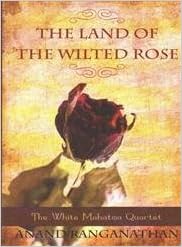
Book Review: The Land of the Wilted Rose

Image result for the land of the wilted

Those who follow the author, Anand Ranganathan, on Twitter know he's one of the smartest and wittiest persons around. His erudite views on almost any topic under the sun are impressive. And he's a scientist!

I knew absolutely nothing about this book when I picked it up. The blurb is interesting - it mentions the Indian empire and the small colony of England. The book reimagines colonialism as Indians having taken over England and a few other European countries. It elaborates the insecurities 'white men' go through when they come across 'brown men'; something people in India and other colonies can identify with, I reckon.

The book starts off a little slowly but then it really picks up pace as it takes us through the arrival of a 17-year-old Maharaja in London and how the 'white men' prepare for it. There are some super descriptions of the various outfits worn by the Indians including Kanjivaram silk saris and dhotis and the delicious food including kakori kababs and bhindi nayantara to be washed down with rasams and lassis. It then tells us how Jack Riley, the mayor of Dover, is punished by being posted as the assistant to the district magistrate of Dhobipur, Uttar Pradesh.

Part 2 of the book has some lovely and vivid descriptions of Mumba Devi, Imperial India's largest city and the world's busiest harbour. Jack is impressed at the Mumba Central station whose 'large marble tiles had a few intonations from the Vedas'. As Jack takes the train to Delhi, the capital of the world, he thought the whole landscape seemed 'so well lit for the benefit of the train passengers so that thy could stand open mouthed and marvel at the splendour of the largest metropolis in the world'.

Though the blurb calls it an allegorical work, a black comedy, I would call it an utopian work - a what-if kind of book which lays before us a mirror image of the British colonialism especially over India. I have several questions about how could we let the British rule over us; this book only aggravates them. My only grouse - the book ends quite abruptly. My only hope - it's Book 1 of The White Mahatma quartet, so maybe the other three books will be published soon.

Some quotes/sentences/references that stayed with me:
Evening winds had brushed past a thousand chimes at a temple entrance.
The cruel fate, as happens more often that not, did intervene.
We forever crave for that thrill, that kick that we get when we admire something for the first time.
And all it took was a century and a half of Indian rule.
Thank the mighty lord Jesus Christ their saviour, and those few who had been lured into conversion, Bhagwaan Sri Krishna.
They were just empty barren lands inhabited by savage people who did not know the difference between a stone and a sculpture.

Last but not the least there's a passing reference to Karna (from the Mahabharata). I am fascinated with Karna for a very long time and his mention was just the icing on the cake.

Read this book to get a sense of the view from the other side. I highly recommend it.

Tuesday, December 27, 2016

Book Review: One Indian Girl

It is a typical Chetan Bhagat novel – from the viewpoint of a female protagonist. I frankly never understood why people hate Bhagat so much. I felt this book was a light read with a few 'feminist' concepts discussed – career-oriented women, career vs. motherhood, etc. It takes you through NYC, Hong Kong & London with a fair bit of Goa thrown in. It does seem like a movie script but I still felt it is better than most movies these days. This book apparently broke all pre-booking records on Amazon thus reaffirming Bhagat's popularity!

The book's blurb states, “Hi, I am Radhika Mehta and I am getting married this week. I work at Goldman Sachs, an investment bank. Thank you for reading my story. However, let me warn you. You may not like me too much. One, I make a lot of money. Two, I have an opinion on everything. Three, I have had a boyfriend before. Okay, maybe two. Now if I was a guy, you would be okay with all of this. But since I am a girl, these three things don't really make me too likeable, do they?”

It's a story about Radhika and her professional & personal life. She's an ambitious woman who will not stop anything to advance in her career and she's also willing to commit herself to somebody & give the relationship her all. The book is a fast-paced, breezy read with quite a few interesting food for thought. Sample this: Radhika's character thinks to herself, “Why do we need our men to praise and validate us in order for us to feel accomplished?” That's quite true, right? By the way, Radhika keeps talking to herself in her mind throughout the book [I guess so do most of us].

Some thoughts that stuck with me while reading the book – she says sorry to a guy for 'snapping' at him – I wonder how many men would say sorry to a woman for 'snapping'? That's an intrinsically feminine thing, I guess. The book also deals with women's insecurities and asks if women can take compliments. It also talks about a world that has been designed by men where women cannot even rejig office timings, as they want to fly while also have a nest at the same time.

Bhagat also highlights how men mostly seem to have the upper hand in a relationship; when a woman exerts authority/control, she's made to feel guilty & bad about it. Bhagat is qualified to write about women's careers considering he gave up a full-time job more than 10 years ago and is a proud house-husband taking care of his twin sons while his wife works full-time.

There are a whole lot of restaurants that feature in the book including in NYC Harry's Cafe & Steak, Nerai, Whiskey Blue and Dishoom in London.

I am rating this book 3 out of 5 – it's not one of Bhagat's better books (like Five Point Someone or Two States) but it's definitely not as bad as his critics are making it out to be.

I was given a review copy of this book by Rupa Publications in exchange for an honest review.

Book Review: My Gita

I have been a big fan of Devdutt Pattanaik's writing and so when My Gita was published, I naturally had to read it. However, the book kind of disappointed me.

The book's blurb states, “In My Gita, acclaimed mythologist Devdutt Pattanaik demystifies the Bhagavad Gita for the contemporary reader. His unique approach – thematic rather than verse-by-verse – makes the ancient treatise eminently accessible, combined as it is with his trademark illustrations and simple diagrams. In a world that seems spellbound by argument over dialogue, vi-vaad over sam-vaad, Devdutt highlights how Krishna nudges Arjuna to understand rather than judge his relationships. This becomes relevant today when we are increasingly indulging and isolating the self (self-improvement, self-actualization, self-realization – even selfies!) We forget that we live in an ecosystem of others, where we can nourish each other with food, love and meaning, even when we fight. So let My Gita inform your Gita.” [The highlight is my emphasis].

The book is divided into 18 chapters with a brief history and introduction of The Gita. I enjoyed reading the introduction more than I did the actual chapters. This talks about the approaches to Hindu history through eight phases – Indus, Vedic, Upanishadic, Buddhist, Puranic, Bhakti, Orientalist and Modern. After this, it mentions the various readings and interpretations of The Gita wherein the first wave involved Sanskrit bhasyas by Vedanta scholars. The second wave involved retellings in regional languages – Devdutt mentions the Gyaneshwara here (which was in the 13th century) as also Dasopant Digambara and Tukaram (in the 17th century). The third wave was translations by Europeans, the fourth wave involved retranslations by Indian nationalists. This was followed by the fifth wave which involved reframing following the end of the two World Wars.

I loved the bits about Karna (I have been besotted with him since The Palace Of Illusions). Karna's circumstances made him an outsider though technically he was an insider. While narrating Karna's story about previous lives, Devdutt chooses to remind us that our story is part of a grand jigsaw puzzle, we are part of a larger narrative.

Throughout each of the chapters, there are several verses mentioned in a paraphrased form which are then elaborated upon by the author. Some of them make interesting reading, some, I felt, were too stretched and made no sense to the theme of the book. Each chapter ends with a small gist. There are, of course, several illustrations throughout the book which seek to take the explanation forward.

The book ends with yet another discourse by Krishna after the conclusion of the Bhagavad Gita. Devdutt says that the yearning for perfection stems from the desire to control and organize the world to our taste, to create a cocoon where everything makes sense to us. The Gita does not aspire for perfection.

To sum up, the book does give an insight into Krishna's discourse to Arjuna before the war. But it also digresses a bit into unrelated topics. I did not enjoy it as much as I enjoyed Jaya (a retelling of the Mahabharata). I am rating it 3 out of 5.

I was given a review copy of this book by Rupa Publications in exchange for an honest review.

Monday, June 13, 2016

Book Review: I Made a Booboo by Shivangi Sharma

Shivangi Sharma's debut book is a hilarious and first-person account of the birth of her child. The book's blurb reads: “Once upon a time there was a woman who used to sleep eight hours a day and laze around on weekends. Her clothes were mostly free of gross body fluids and her bag rarely had biscuit crumbs. Then she decided to have a baby. With books and the internet for friends – and a husband who answered commonsensically – she thought she had it all sorted. But then her baby arrived, and turned everything upside down! The baby made it his mission to present a new surprise every day. Mommy, after fighting hours of helplessness, came to learn that parenting was a lost battle. There was only one way to survive – keep calm, laugh on and write when the baby dozes. The result: I made a Booboo, a rollicking account of the trials, tribulations and occasional triumphs of a first-time mom. P.S: Everyone did live happily ever after (albeit only when the baby willed so).”

The book's chapter titles are funny ranging from “Stork Brings the Baby. Well, Not Exactly” to “Breakfast (and Lunch and Dinner) of Champions” and “His Majesty – the Invincible, the Unrestricted, the Toddler”.

Shivangi starts off by narrating her life before the baby – like any other normal couple's is. But when they learn about the imminent arrival of their first child, their life turns upside now – more the mother's as she adjusts with both the physical and the mental aspects. Shivangi's writing style is matter-of-fact and she doesn't hesitate from discussing even the most basic to the most gross stuff!

The book takes us through her pregnancy to her delivery (albeit with a few false alarms thrown in) and her adjusting to an infant in the house. Anybody who's ever had a baby or been in a house where there's a child can easily identify with most of the points stated in the book.

Shivangi uses dry wit and humour to narrate the trials and tribulations associated with raising a child. Amidst that, she also finds spirituality. As she writes about her son, “He is totally at peace with his existence – not wanting to be at some other place or in some other time. He holds no grudges against anyone. He lives life to the fullest, eats to his heart's content and does what he likes. “ As she points out, there's immense joy that a child finds in the simplest of things. And, as she reminds us, “We are all born like that but then we forget it over the years as we run fast to grow up and reach our respective finishing lines.”

I loved reading the book for the matter-of-fact way in which Shivangi has written without any fancy words or proferring any unwanted advice. I would give this book 3/5.

Note: I was given a review copy of this book by Rupa Publications. Needless to say, the review is independent of the same.

Thursday, December 24, 2015

My Year 2015 in Books!

So, it's been a really long time that I have updated my blog. I guess I have been too busy reading books to actually take time out and review them. Not that, that's any excuse. So, one of my 2016 New Year Resolutions is definitely to blog more.

I am a regular visitor on Goodreads and, in addition to using it to track the books I have read, also use it to peruse books that interest me, see what others are reading, go through quotes, read up on an author's entire works till date, etc. I am really proud of the fact that I was able to read 50 books this year; the number could obviously have been way higher but guess I will just read more books in 2016 :)

One of the features I really like about this site is the analytics it does. The link given below will give you all the details about the books I have read in 2015 including the total number of pages I have read and the shortest/longest books. 

The Great Gatsby was one of the most popular books I read (2 million people have read it apparently!) My average rating for 2015 was 3.7.

To know which books I read this year, go here: https://www.goodreads.com/user/year_in_books/2015/12430250

Saturday, September 26, 2015

Book Review: The Power Of Habit by Charles Duhigg


In The Power Of Habit – Why we do what we do and how to change – author Charles Duhigg takes us into the thrilling and surprising world of the scientific study of habits. The book is an eye-opener into how habits change lives both of individuals and corporates. Though all of us know how difficult it is to form good habits and get rid of bad habits, this book made for some very interesting reading. A few examples of what I found fascinating throughout the book follow.

In one example of a man who had lost parts of his memory, one of the doctors makes a beautiful comment, “I saw how rich life can be even if you can't remember it. The brain has this amazing ability to find happiness even when the memories of it are gone.”

“Keystone habits” matter more than others in remaking businesses and lives. They can influence how people work, eat, play, live, spend and communicate. Keystone habits start a process that, over time, transforms everything. While discussing these habits, the book talks about how they help explain how Michael Phelps became an Olympic champion and how Alcoa became one of the best performing stocks in the Dow Jones index, while also becoming one of the safest places on earth.

Duhigg states how routines are habits which we do without thinking. Habits create cultures where new values become ingrained. Small wins help create widespread changes, for example, keeping a food journal helps monitor one's diet leading to better health.

The book also highlights the power of social peer pressure in leading to worldwide movements. Most movements happen because of strong ties of friendship and weak ties of peer pressure giving protestors a new sense of self identities. A wonderful example is the protests against the race issues in the USA.

Another piece of discussion that I found interesting was the one on sleepwalking. Mark Mahowald, a professor of neurology at the University of Minnesota and a pioneer in understanding sleep behaviours says, “Sleepwalking is a reminder that wake and sleep are not mutually exclusive.” There's also an interesting study conducted by a cognitive neuroscientist Reza Habib where he was particularly interested in looking at the brain systems involved in habits and addictions.

There's a fascinating piece of information on William James whose 1892 quote, “All our life, so far as it has definite form, is but a mass of habits.” features in the prologue. James spent 12 months believing he had control over himself and his destiny, that he could become better, that he had the free will to change. He later wrote that the will to believe is the most important ingredient in creating belief in change. And that one of the most important methods for creating that belief was habits.

Duhigg offers a four-stage plan to form or reshape habits. Identify the routine, Experiment with rewards, Isolate the cue and Have a plan. As the author says, Once you know a habit exists, you have the responsibility to change it.

I hope now that I have read the book I will be able to at least change a few of my habits and, thus, change my life as many of the people mentioned in the book have done.

Saturday, August 22, 2015

My most read Top Ten Authors

It's a shame I have neglected this blog for so long. However, I hope to change that, starting today.

This post is inspired by https://adventuresofatraveller.wordpress.com/2015/08/21/the-top-ten-authors-ive-read-most-books-from/

My most read Top Ten Authors are:

1. Paulo Coelho (6 books read) - He is one of my favourite authors after all. Though some people find him vague and a little too preachy, I think his books and stories are wonderful. And The Alchemist remains my go-to book for most situations.

2. Six authors are tied at place 2 with 4 books each - Dale Carnegie (the original self-help guru), Preeti Shenoy (one of the top selling woman authors in India), Chetan Bhagat (isn't his name itself enough), Ravi Subramanian (the John Grisham of banking), Jane Austen (bless her for giving us Mr. Darcy) and Malcolm Gladwell (think without thinking).

3. Eight authors are tied at place 3 with 3 books each - Mitch Albom, Khaled Hosseini, Haruki Murakami, Amitav Ghosh, Vikram Seth, Ruskin Bond, Jack Canfield and Erich Segal.

As is obvious, there are no clear favourites when it comes to my most read authors - I basically seem to be reading anybody and everybody :)

But considering the fact that I am besotted with Vikram Seth (or more specifically, A Suitable Boy), maybe, just maybe, I need to push him to the top of this list. Followed by Haruki Murakami perhaps? :)

Thursday, March 12, 2015

The Rang De Basanti Album

When it released in January-2006, Rang De Basanti (RDB) became a cult movie almost overnight. Everybody, including me, was simply blown away by it. It had a very unique storyline, brought alive on screen amazingly well by all the leading and supporting actors. In my opinion, the music of the movie composed by A. R. Rahman had a huge role to play in its success. I am fascinated and love each of the songs for different reasons elaborated below.

The title song – Rang De Basanti – is a typical Punjabi song sung by Daler Mehndi & K. S. Chithra. I bet nobody can avoid tapping their feet while listening to this song. Both the lyrics and the music have a very North Indian feel to it.


The song Paathshaala turned out to be a total rebellious college song. Prasoon Joshi's youthful lyrics only added to its charm. Sample this: “Yaaron Ki Equation Hain Love Multiplication Hain”. It is very easy to time travel back to your college days while humming this song. It was shot at Nahargarh Fort in Jaipur.


When Madhavan proposes to Soha Ali Khan, Naresh Iyer chooses to croon the romantic and slow number Tu Bin Bataayein. It was shot in a spectacular location called Mughal Sarai, located about 20 kilometres from NH-1 [http://www.wherewasitshot.com/2010/05/26/mughal-sarai-doraha/]. I hope to visit it someday.


A. R. Rahman considers Luka Chuppi to be a very special song for him because it was the first time he had an opportunity to sing with Lata Mangeshkar. It comes at a very poignant moment in the movie; when a mother has to bear with the loss of her young son in a plane accident. Listen to it and you will find it difficult to hold your tears.


Khoon Chala sung by Mohit Chauhan is his first song with A. R. Rahman. It portrayed the angst of a civil society rising against the injustice faced by it quite well. Of course, I could be biased since I am such a huge fan of Mohit Chauhan!


And last, but definitely not the least, is Rubaroo sung by Naresh Iyer and A. R. Rahman. This song won the National Award for Best Male Playback for Naresh Iyer. The song comes at the fag end of the movie when the protagonists have confessed what they have done and heave a big sigh of relief. The song captures their friendship and their commitment to the cause quite beautifully.

Saturday, March 07, 2015

Book Review: Norwegian Wood by Haruki Murakami

This is my first ever Murakami book. I was told that this is unlike any of his other books in that, it is only a 'simple love story'. But, what a love story it turned out to be! It was definitely not simple and certainly not predictable.

The book's title comes from a song by Beatles (https://www.youtube.com/watch?v=lY5i4-rWh44). Before I picked up this book, I was not aware that there was such a song by the band. When the protagonist of the book, Toru Watanabe hears this song, he is transported back to his college days and his first love Naoko who considers this her favourite song. I identify with this sentiment; I am often reminded of someone or the other whenever I hear a particular song that I associate with them. The book is set mostly in 1969 Tokyo when Toru and his girlfriend Naoko attend University.

It is a story that every person who has ever gone to college will identify with – the conflict of emotions you go through, the dislike for a particular course you do not want to study, the tragedy of trying to fit in with your friends, university politics, and, of course, falling in love and trying to make sense of it. And Toru is no different. In the course of the book, he also meets the vivacious and extroverted Midori. It's a struggle for Toru who feels that he now has to choose between either of the two girls.

Murakami is a master storyteller and, for me, the book was an absolute page-turner. However, as much as I enjoyed reading about the main plot of the story (featuring the three protagonists), I also loved reading about Tokyo and its streets and the trains and the restaurants Toru and Midori frequented. Murakami was able to make me feel as if I was right there in the middle of Tokyo observing the events as they took place.

Also, as much as the book is a love story, it is also a story about dear friendships. Because without a dear friendship, can there really be love? And while one may eventually stop loving somebody, the friendship would still remain.

I loved how the book is set mainly in 1969; Woodstock happened the same year (http://en.wikipedia.org/wiki/Woodstock) and one of my most favourite songs ever also happens to talk about the 'Summer of 69' (https://www.youtube.com/watch?v=9f06QZCVUHg).

It is very easy to love Toru who is as clueless as any other teenager on the cusp of adulthood. But he is sincere and caring and committed and quite serious when it comes to relationships. As Midori says somewhere in the book when she is telling Toru why she loves him, "You know the English subjunctive, you understand trigonometry, you can read Marx, and you don't know the answer to something as simple as that?"

Toru is a bibliophile; some of the books he mentions in Norwegian Wood include John Updike's The Centaur, F. Scott Fitzgerald's The Great Gatsby, Raymond Chandler, Thomas Mann's The Magic Mountain, Karl Marx's Das Kapital, William Faulkner's Light in August and Hermann Hesse's Beneath The Wheel.

I really enjoyed this book though I did feel equal parts depressed and equal parts angry in the course of reading it. But, I guess, if any book does that to you, then it is a well-written one. Go read it if you want to experience love and heartbreak Murakami-style; you will not be disappointed.