Showing posts with label Book Review. Show all posts

Sunday, January 15, 2023

Book Review: Braving A Viral Storm by Aashish Chandorkar & Suraj Sudhir


Life can only be understood backwards; but it must be lived forwards.” Soren Kierkegaard

As the Covid-19 pandemic hit, and slowly ravaged, the world in 2020 & 2021, and, now with the hindsight of the past 3 years, these words of Kierkegaard struck me. From a position of ignorance to fear and, from a sense of hope to relief, we have come a long way. And the credit for this goes no doubt to India’s almost miraculous vaccination drive. Dubbed as the #LargestVaccinationDrive, in retrospect, it seems simple and not so much of a big deal. The authors of this book tell us why this was not so.

Beginning from when India reported its first case on 30th Jan’ 20, to the entire vaccine R&D process (including the focus on Aatmanirbharta), EUAs being granted for 2 indigenous vaccines, to the vaccine rollout (including detailed logistics of the vaccine suppliers, cold storage chains, vaccinators, people behind the scenes, etc.), and the current vaccination status, the book really captures the journey India has traversed in the last 3 years. [Incidentally, 16th Jan’ 23 will be 2 years from the day the vaccine rollout started in the country].

The authors detail the entire process of how the Govt. machinery got into immediate action mode in Mar’20 itself, beginning with the creation of a task force, pushing for vaccines’ development nationally, monitoring the national & international happenings (including publishing daily data on the vaccine supplies & vaccinations done), etc.

The odds were stacked against India & the developing world in terms of financial & operational constraints for developing a vaccine. And yet, the ingenuity of Indian pharmaceutical firms & its scientists enabled it to manufacture not 1 but 2 vaccines which covered most of the population. They were aided by the CoWIN platform, which became the fastest tech platform globally to amass 20 crore registrations in less than 4 months. It routinely handled more than a billion visits daily at the peak of the vaccination process [I may have contributed to some of those visits myself :)]

The book details how India’s fortitude, courage, conviction, collective efforts & foresight enabled it to tide over this crisis. Its people had an unflinching trust in the country’s leadership & scientists. Several challenges in the vaccination process, including scale, readiness to take vaccines, training the medical personnel, etc., were overcome through four Ps – process, people, platform & persuasion. What India demonstrated during the Covid-19 response is that it has a sophisticated public that understands the challenges of execution & also recognizes both basic & sophisticated solutions being delivered to solve long-pending problems.

This is not to say that the process proceeded without any criticisms. The vaccination rollout was questioned, lampooned, prejudged, subjected to a veiled ridicule, etc. But as Alexandre Dumas noted, “Nothing succeeds like success.”

The detailed discussion on Aatmanirbhar Bharat – how India stood its ground while fighting against pressure from international pharma firms, their domestic lobbyists & global amplifiers was an interesting read. So was the chapter on Vasudhaiva Kutumbakam, especially Vaccine Maitri, in which India sent vaccines to several low & middle income developing friendly nations [by the time the Delta wave hit India in Apr’21, it had supplied vaccines to ~95 different countries & entities; by the end of Oct’22, India had exported ~27 crore vaccine doses to 100 countries]. India also fought for IPR issues at WTO & sought TRIPS waiver. The WTO developments ensured that India received a lot of goodwill from the developing world & from the Global South.

I got literal goosebumps reading Pg. Nos. 168-169: “Young India believes” – why the youth embraced vaccination so enthusiastically.

As of 15th Jan’ 23, India has crossed 220 crore vaccination doses; 2 years from the start of the vaccination drive. This would have seemed almost entirely unbelievable to someone at the start of the journey.

The book is quite an interesting and easy read, peppered with a lot of anecdotes, data (numbers + tables), and facts (including how other nations dealt with this) about the vaccination journey. It seeks to remind us of how difficult the path has been, especially for India, and how it has come out strongly in the fight against Covid-19, helmed by a strong leadership, ably supported by the innovative skills of our scientists & the humble backing of our various institutions including BIRAC, DBT, DCGI, ICMR, IISc, NIV, etc.

While reading the book, there were quite a few things which I learned for the first time, including:

  • Louis Pasteur’s work led to doctors beginning to use personal protective equipment (PPE).

  • India took longer than Somalia, Ethiopia, & all of sub-Saharan Africa to eradicate polio.

  • Most of the contributed smallpox vaccine was provided under bilateral agreements by the USSR, which donated more than 1,400 million doses from 1958 to 1979.

  • Indian states already had databases on individuals with co-morbidities, which were created through non-communicable disease screenings done by health & wellness centres.

  • Introduced in 2015, the Electronic Vaccine Intelligence Network, or eVIN, predated Covid-19 by several years. The CoWIN platform was extrapolated from this.

  • Mumbai airport has Asia’s biggest import cold chain capacity, with a storage capacity of more than 30,000 tonnes.

Some of the sentences in the book that I really loved:

  • India was up to the task of this global arranging of deckchairs.

  • The commentary was basically the tyranny of the op-ed space – the one with the access to the opinion can have a field day alleging practically anything.

  • When complex processes work exactly as planned, there is not much analysis of why things worked the way they were supposed to.

And, last but not the least, the last sentence in the Acknowledgements: Your faith is our booster dose of motivation.

Sunday, November 20, 2022

Book Review: The Magicians Of Mazda: Ashwin Sanghi

I have been a huge fan of Ashwin Sanghi’s writing and when I read that he is out with a new book – The Magicians of Mazda – I knew I had to get my hands on it. The kind folks at Indica Books sent me a review copy and I couldn’t be thrilled.

Like any other Ashwin Sanghi book, this one is a combination of history, geography, science, and architecture, backed by a lot of research into the smallest of things.

It starts with a Parsi scientist Jim Dastoor getting abducted from his laboratory in Seattle and from there the story traverses Tehran and Afghanistan, while in between also reaching Diu & Kashmir in India. It’s written in a quite a thrilling fashion and the reader is always intrigued to find out what’s going to happen next. Also, his writing style is such that one is always suspecting almost all the characters, thinking one of them is going to frame the other.

There is also a lot of discussion in and around how the Parsis came to be in India, how did they set up their fire temples in different places in West India, primarily Gujarat, and how the protagonist of the story is entrusted with a Parsi secret, as part of his legacy; a secret which some people would even kill to lay their hands on.

While I enjoyed reading the book, and getting to know how similar Parsi and Hindu rituals are, especially with respect to worshipping the fire, at some places, the book becomes quite tedious to keep track of. I kept going back and forth sometimes trying to figure out who the different characters referred to in the book are.

Sunday, April 18, 2021

Book Review: Sanghi Who Never Went To A Shakha by Rahul Roushan

For those who are active on social media, especially Twitter, Rahul Roushan is not an unknown name. His tweets come across as witty oozing with satire and sarcasm, with pithy observations on the happenings in our world, especially in the political world. So I had to get my hands on the first book written by him.

Rahul has not written anything new in his book. And yet, it is a very important book; one that needs to be read by as many people as possible, in India and around the world – especially by people like me – urban, educated, middle-class/upper middle-class, to know what has seemingly changed in India over the last 7 years; why do we see the masses getting so vocal about their beliefs and opinions, and the how and why of the rise of Modi.

Like Rahul, I too was not ‘involved’ in politics until 2013. Though I was aware of the political leaders and the various parties, I did not follow them religiously (if I may use that word!); I was not clued into their every action and I was definitely not vocal about my political, and religious, choices.

In a way, Modi changed that. This book seeks to explain it, amongst several other things.

It also seeks to talk about the change in society, and politics, from Independence – the Nehruvian era, the rise, and assassination of Indira Gandhi, Rajiv Gandhi’s unprecedented parliamentary majority and the birth of the Mandal & Mandir politics, the rise of Lalu Prasad Yadav and Mulayam Singh Yadav, political instability at the Centre and the economic liberalization during the 1990s, the 2002 anti-Godhra riots in Gujarat, the various terrorist blasts all across India almost every other year, including the 2008 terrorist attacks in Mumbai, the gang rape in Delhi in 2012, the rise of the anti-corruption movement led by Anna Hazare, AAP forming the Govt. in Delhi, the rise of Modi to the Centre, etc.

The book also captures the double standards of the Left, the secular parties, the intellectuals, most of the mainstream media (MSM) and the online news portals [Rahul was/is a part of both] through various real-life examples and incidents. As I was not active into politics earlier, most of these were new, and shocking, to me. Now I am better able to relate to it, seeing it almost every day on MSM/SM. Rahul highlights how these people actually indulge in pretentious intellectual snobbery, with a condescending and patronizing attitude. Smokescreens of bigotry, jingoism and communalism are created, followed by muddling of facts, denials, shifting of goalposts and an orchestrated propaganda.

The book also talks about how social media has truly democratized the discourse in India [something I am truly grateful for – people have fallen off their pedestals and how!] – where people decide the tone and contours of a debate, without the direct involvement or censorship by the MSM. This has given rise to a whole generation of people who are now actively involved in politics [compared to people like me] and who are vocal about their choices & the reasons for the same.

Last, but definitely not the least, the book talks about Rahul’s journey from being offended at being called a Sanghi to actually getting comfortable with, and being proud of, being called one.

It spends a fair bit of space to discuss in detail about Modi – how he was relentlessly projected as a ‘controversial’ leader who won the 2002 elections riding on the wave of ‘hate’ (the narrative still seems familiar, right?), how he won three state elections with an absolute majority, how Modi started projecting himself as pro-development, how he understood how social media worked, etc. It also gives Modi a fair bit of credit in making people warm up to Hindutva/Hindu nationalism. Modi had started to impress many, especially the urban online-savvy educated class, many of whom had no special ideological affinity for the RSS or Hindutva.

I was able to identify with, and nod my head at, some of the incidents and examples in the book – the prejudices and biases against anything and everything connected to the word ‘Hindu’, the ‘liberal’ habit of linking every vice in the Indian society to some aspect of the Hindu culture and religion, the whitewashing of the atrocities committed by Muslim invaders, the deeply narrow definitions assigned to words like secularism, anti-Brahmin rhetoric, etc.

Rahul’s writing style is easy-to-read and the book is pretty much a page-turner in that sense. His satire and sarcasm comes across very well in the book. Also, he does not mince words while narrating or describing certain incidents. Though the book is a kind of an autobiography, I am sure many people will identify with some or the other incidents in it. The only thing I disagree with Rahul is his paranoia about the survival of Hindus. Hindus have, and will survive, forever. In fact, most Hindus, including me, have now started becoming very vocal about a lot of things.

Some of the sentences that stuck with me:

1. At the core of it, the secular state of India discriminates against Hindus by assuming that they can never be disadvantaged.

2. Every political party is not the same when it comes to the environment they end up creating by the mere virtue of being in power. They trigger some changes directly, and some indirectly, some as a driving force, some as a catalyst, some intended, some unintended.

3. You don’t need to publicize a treatise against Brahminism to push a person into cutting his janeu; you just need a good personal story. That is the power of storytelling.

4. When the ideological debates would start getting heated, it would invariably be the pro-Modi guy who had to step back and assuage the feelings of his liberal friend, who just couldn’t stop ranting about how fascism must be stopped.

5. The establishment is an entrenched bunch of people and institutions that systematically control the thoughts and beliefs of the masses. It is often achieved via control on the media and academics. Political power is transient, but the power that a real establishment enjoys is potent and lasting. [This one is my favourite!]

I would heartily recommend this book to anyone wanting to know what has changed in India, especially why do Hindus suddenly seem so vocal about their identity. I would also recommend this book to anyone wanting to get a sense of the history of India – how certain unconnected things are actually connected, which is not apparent to the common man. The book is a great read and I will definitely be rereading it often.

Sunday, December 30, 2018

Book Review: The Library at Night by Alberto Manguel

The Library at Night is an ode to libraries worldwide - both old and new - and the author's personal library in a small village in Loire, France. The author finds great comfort in sitting in his own library at night and simply surfing through his books; "to assemble in one place our vicarious experience of the world." The book is also an ode to various books and its readers who grant books immortality - "Every reader exists to ensure for a certain book a modest immortality. Reading is, in this sense, a ritual of rebirth."

The book describes the library as myth, order, space, power, shadow, shape, chance, workshop, mind, island, survival, oblivion, imagination, identity and home. Some of the libraries described are Colegio Nacional de Buenos Aires, Le Presbytere, Bodleian Library, Centre Pompidou Library in Paris, Laurentian Library in Florence, etc. Some imaginary libraries are also mentioned such as the library of Captain Nemo, Mr. Casaubon's scholarly library in George Eliot's Middlemarch, murderous, monastic library in Umberto Eco's The Name of the Rose, etc.

The author notes, "Old or new, the only sign I always try to rid my books of (usually with little success) is the price-sticker that malignant booksellers attach to the backs. These evil white scabs rip off with difficulty, leaving leprous wounds and traces of slime." While comparing paper books with electronic books, Manguel says "leafing through a book or roaming through shelves is an intimate part of the craft of reading and cannot be entirely replaced by scrolling down a screen, any more than real travel can be replaced by travelogues and 3-D gadgets." He describes the joy of a library thus "to be able to enter a place where books are seemingly numberless and available for the asking is a joy in itself."

Manguel also mentions how certain books were banned at certain points of time for various reasons - under the military regimes in Argentina, Uruguay and Chile in the 1970s, poems of Neruda and Nazim Hikmet (communists) and novels of Tolstoy and Dostoevsky (Russians) were considered suspicious. In March 2003, Cardinal Joseph Ratzinger argued that the Harry Potter books "deeply distort Christianity in the soul, before it can grow properly." Dr. Joseph Goebbels, Hitler's propaganda minister, declared that the public burning of books by authors such as Heinrich Mann, Stefan Zweig, Freud, Zola, Proust, Gide, Helen Keller and H. G. Wells allowed "the soul of the German people again to express itself."

I loved reading about the history of libraries, which is, in essence, a history of the world till date. I also loved reading about the comparison between paper books and electronic books and how the two will continue to co-exist.

My only grudge - the book makes absolutely no mention of any library in India nor any Indian author. It's a little sad considering India has the most number of libraries [https://www.quora.com/Which-country-in-the-world-has-the-most-libraries-total-and-which-has-the-most-libraries-per-capita] and possibly the largest number of languages in which books are written in a single country. Truly, history that is never recorded is never narrated.

Some quotes that stayed with me:
The illusion of immortality is created by technology.

Like Nature, libraries abhor a vacuum, and the problem of space is inherent in the very nature of any collection of books.

We scorn, wrote Tacitus in the first century, the blindness of those who believe that with an arrogant act even the memory of posterity can be extinguished.

The act of reading is now condescendingly accepted as a pastime, a slow pastime that lacks efficiency and does not contribute to the common good.

The Web is an instrument. It is not to blame for our superficial concern with the world in which we live.

We alone, and not our technologies, are responsible for our losses, and we alone are to blame when we deliberately choose oblivion over recollection. The petroglyphs of our common past are fading not because of the arrival of a new technology but because we are no longer moved to read them.

The stories that ultimately reach us are but the reports of the survivors.

There is something about sitting outside in the dark that seems conducive to unfettered conversations.

Alice's bewilderment or Sinbad's curiosity reflect again and again my own emotions.

Electronic text that requires no page can amicably accompany the page that requires no electricity.

Sunday, November 11, 2018

Book Review: The Fadnavis Years by Aashish Chandorkar


I have been following Aashish Chandorkar on Twitter (@c_aashish) for a while now. He is a prolific writer on public policy and comes across as someone who is very well-read and extremely witty. So when he announced this book, I knew I had to get my hands on it. I am a huge admirer of and have been tracking & following Devendra Fadnavis’ work since the time he took over as the Chief Minister (CM) of Maharashtra. To be fair, I had not heard of Fadnavis before he became the CM; I am sure there would be many others like me.

The Fadnavis Years is an absolute page-turner of a book; I finished it in almost one sitting. There were many facets of the CM that I came to know about only while reading the book. Aashish’s writing style is easy-to-read, with specific data points thrown in (for the numerically-inclined) coupled with his very witty/sarcastic way of putting across things. This makes the book a great biographical read about the second youngest CM of Maharashtra.
 
The book takes us through the period from the swearing-in of Fadnavis to the various problems which awaited him to how he went about solving them, equipped with technology, quick decision-making, delegation of powers and monitoring progress via a core group of people known as the ‘War Room’. It ends with a few suggestions on what the CM needs to focus on as we approach the 2019 elections!
 
Fadnavis took oath as the CM of Maharashtra on 31-Oct-2014 at the Wankhede Stadium in Mumbai and plunged head-long into the political quagmire that awaited him. Today, he is the longest serving non-Congress CM of the state. As is stated in the book, “the brave, positive and pro-merit move by Modi and Shah” of appointing Fadnavis seems to have paid off.
 
What I did not know and learned from the book was that Fadnavis was a three-time Member of the Legislative Assembly (MLA). In the 2014 State Elections, the BJP crossed the magic figure of 100 seats for the first time since 1990. This was largely due to the efforts of Fadnavis.
 
Some of the key initiatives launched/fast-tracked by the CM which the book talks about are: Aaple Sarkar portal, Mumbai Metro, Mumbai Trans Harbour Link, Navi Mumbai airport, Coastal Road, Mumbai-Nagpur Expressway (Samruddhi Corridor), PMRDA, Pune Metro, Pune Ring Road and the Jalyukt Shivar Abhiyan. I agree with the author when he says “For the first time in many decades, Maharashtra is witnessing such huge and focused investments in changing the urban landscape.” In Mumbai, the rapid pace at which the Metro work is being done is there for all to see.
 
The Jalyukt Shivar Abhiyan has been covered in the media extensively and can be safely said to be Fadnavis’ biggest contribution/legacy. Its success is apparent from the drop in the number of tankers which were deployed in the drought-prone regions from 2016 to 2018. Also, “creating a mass movement out of a government program has been the biggest success of Fadnavis.”
 
The book also details the investment opportunities Fadnavis brought to the state through his consistent and persistent discussions and the infrastructure provided to industries, including MIHAN SEZ, Aurangabad Industrial City, Amravati Apparel Park, etc.
 
The book delves into how the politics in Maharashtra has always been intricately linked with control of the agricultural co-operative bodies (district co-operative banks, APMCs and agricultural commodity processing co-operatives, especially in the sugar belt districts), and how Fadnavis went about trying to delink the control one-by-one.
 
The author gives us a fair sense of the problems/difficulties the CM had to face like the caste protests, farm loan waiver demands, jobs’ reservation stirs, Koregaon Bhima protests, farmers’ long march, etc. According to the author, most the issues stemmed from the fact that “accepting personal irrelevance is never easy in politics”.
 
Throughout the book, Aashish via several examples, highlights Fadnavis’ vision, foresight, empathy, probity and sense of ownership. He attributes the CM’s success to his gift of the gab, a keen eye for issues of governance and the fact that he is a very social media savvy politician. “The middle class was beginning to like their Chief Minister, who was seen as hardworking in the face of poor odds of succeeding.”
 
Some of the author’s statements in the book that I really liked:

·         It was the straw which broke the tiger’s back (referring to the effect of the BJP win in Mumbai on the Shiv Sena).
·         Voter expectations often do not wait for an ideal execution environment.
·         As is the wont with the infrastructure projects of Pune, the plan was put on the backburner with deft precision almost immediately.
·         In the presumed-rational world of policy-making, responses to stimuli can be modelled. The control variables behave obediently in social science experiments, while the independent variables determine the course of dependent ones. Real life, however, does not always follow these predictive ones.
·         The wins were pyrrhic, the losses ignoble.
·         It is never easy to manage the individuals who one surpasses to scale a peak, and much more difficult to make them work productively.
·         Merit gets critically assessed every day in politics, surnames stay permanent.
·         Hope is not a strategy, certainly not in politics.

I would heartily recommend the book to anyone wanting to know more about Devendra Fadnavis’ life. It is also a good book for one wanting to know more about politics in Maharashtra. I have one complaint though – I wished the author would have covered more about Fadnavis’ life as an MLA and mayor of Nagpur, which could have given a better background to his ascendancy to the CM position. Maybe he will cover it in his next book, when Fadnavis takes over as the CM of Maharashtra for the second time towards the end of next year!

Wednesday, August 15, 2018

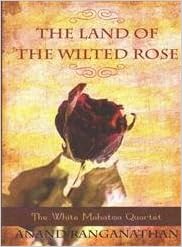
Book Review: The Land of the Wilted Rose

Image result for the land of the wilted

Those who follow the author, Anand Ranganathan, on Twitter know he's one of the smartest and wittiest persons around. His erudite views on almost any topic under the sun are impressive. And he's a scientist!

I knew absolutely nothing about this book when I picked it up. The blurb is interesting - it mentions the Indian empire and the small colony of England. The book reimagines colonialism as Indians having taken over England and a few other European countries. It elaborates the insecurities 'white men' go through when they come across 'brown men'; something people in India and other colonies can identify with, I reckon.

The book starts off a little slowly but then it really picks up pace as it takes us through the arrival of a 17-year-old Maharaja in London and how the 'white men' prepare for it. There are some super descriptions of the various outfits worn by the Indians including Kanjivaram silk saris and dhotis and the delicious food including kakori kababs and bhindi nayantara to be washed down with rasams and lassis. It then tells us how Jack Riley, the mayor of Dover, is punished by being posted as the assistant to the district magistrate of Dhobipur, Uttar Pradesh.

Part 2 of the book has some lovely and vivid descriptions of Mumba Devi, Imperial India's largest city and the world's busiest harbour. Jack is impressed at the Mumba Central station whose 'large marble tiles had a few intonations from the Vedas'. As Jack takes the train to Delhi, the capital of the world, he thought the whole landscape seemed 'so well lit for the benefit of the train passengers so that thy could stand open mouthed and marvel at the splendour of the largest metropolis in the world'.

Though the blurb calls it an allegorical work, a black comedy, I would call it an utopian work - a what-if kind of book which lays before us a mirror image of the British colonialism especially over India. I have several questions about how could we let the British rule over us; this book only aggravates them. My only grouse - the book ends quite abruptly. My only hope - it's Book 1 of The White Mahatma quartet, so maybe the other three books will be published soon.

Some quotes/sentences/references that stayed with me:
Evening winds had brushed past a thousand chimes at a temple entrance.
The cruel fate, as happens more often that not, did intervene.
We forever crave for that thrill, that kick that we get when we admire something for the first time.
And all it took was a century and a half of Indian rule.
Thank the mighty lord Jesus Christ their saviour, and those few who had been lured into conversion, Bhagwaan Sri Krishna.
They were just empty barren lands inhabited by savage people who did not know the difference between a stone and a sculpture.

Last but not the least there's a passing reference to Karna (from the Mahabharata). I am fascinated with Karna for a very long time and his mention was just the icing on the cake.

Read this book to get a sense of the view from the other side. I highly recommend it.

Tuesday, December 27, 2016

Book Review: One Indian Girl

It is a typical Chetan Bhagat novel – from the viewpoint of a female protagonist. I frankly never understood why people hate Bhagat so much. I felt this book was a light read with a few 'feminist' concepts discussed – career-oriented women, career vs. motherhood, etc. It takes you through NYC, Hong Kong & London with a fair bit of Goa thrown in. It does seem like a movie script but I still felt it is better than most movies these days. This book apparently broke all pre-booking records on Amazon thus reaffirming Bhagat's popularity!

The book's blurb states, “Hi, I am Radhika Mehta and I am getting married this week. I work at Goldman Sachs, an investment bank. Thank you for reading my story. However, let me warn you. You may not like me too much. One, I make a lot of money. Two, I have an opinion on everything. Three, I have had a boyfriend before. Okay, maybe two. Now if I was a guy, you would be okay with all of this. But since I am a girl, these three things don't really make me too likeable, do they?”

It's a story about Radhika and her professional & personal life. She's an ambitious woman who will not stop anything to advance in her career and she's also willing to commit herself to somebody & give the relationship her all. The book is a fast-paced, breezy read with quite a few interesting food for thought. Sample this: Radhika's character thinks to herself, “Why do we need our men to praise and validate us in order for us to feel accomplished?” That's quite true, right? By the way, Radhika keeps talking to herself in her mind throughout the book [I guess so do most of us].

Some thoughts that stuck with me while reading the book – she says sorry to a guy for 'snapping' at him – I wonder how many men would say sorry to a woman for 'snapping'? That's an intrinsically feminine thing, I guess. The book also deals with women's insecurities and asks if women can take compliments. It also talks about a world that has been designed by men where women cannot even rejig office timings, as they want to fly while also have a nest at the same time.

Bhagat also highlights how men mostly seem to have the upper hand in a relationship; when a woman exerts authority/control, she's made to feel guilty & bad about it. Bhagat is qualified to write about women's careers considering he gave up a full-time job more than 10 years ago and is a proud house-husband taking care of his twin sons while his wife works full-time.

There are a whole lot of restaurants that feature in the book including in NYC Harry's Cafe & Steak, Nerai, Whiskey Blue and Dishoom in London.

I am rating this book 3 out of 5 – it's not one of Bhagat's better books (like Five Point Someone or Two States) but it's definitely not as bad as his critics are making it out to be.

I was given a review copy of this book by Rupa Publications in exchange for an honest review.

Book Review: My Gita

I have been a big fan of Devdutt Pattanaik's writing and so when My Gita was published, I naturally had to read it. However, the book kind of disappointed me.

The book's blurb states, “In My Gita, acclaimed mythologist Devdutt Pattanaik demystifies the Bhagavad Gita for the contemporary reader. His unique approach – thematic rather than verse-by-verse – makes the ancient treatise eminently accessible, combined as it is with his trademark illustrations and simple diagrams. In a world that seems spellbound by argument over dialogue, vi-vaad over sam-vaad, Devdutt highlights how Krishna nudges Arjuna to understand rather than judge his relationships. This becomes relevant today when we are increasingly indulging and isolating the self (self-improvement, self-actualization, self-realization – even selfies!) We forget that we live in an ecosystem of others, where we can nourish each other with food, love and meaning, even when we fight. So let My Gita inform your Gita.” [The highlight is my emphasis].

The book is divided into 18 chapters with a brief history and introduction of The Gita. I enjoyed reading the introduction more than I did the actual chapters. This talks about the approaches to Hindu history through eight phases – Indus, Vedic, Upanishadic, Buddhist, Puranic, Bhakti, Orientalist and Modern. After this, it mentions the various readings and interpretations of The Gita wherein the first wave involved Sanskrit bhasyas by Vedanta scholars. The second wave involved retellings in regional languages – Devdutt mentions the Gyaneshwara here (which was in the 13th century) as also Dasopant Digambara and Tukaram (in the 17th century). The third wave was translations by Europeans, the fourth wave involved retranslations by Indian nationalists. This was followed by the fifth wave which involved reframing following the end of the two World Wars.

I loved the bits about Karna (I have been besotted with him since The Palace Of Illusions). Karna's circumstances made him an outsider though technically he was an insider. While narrating Karna's story about previous lives, Devdutt chooses to remind us that our story is part of a grand jigsaw puzzle, we are part of a larger narrative.

Throughout each of the chapters, there are several verses mentioned in a paraphrased form which are then elaborated upon by the author. Some of them make interesting reading, some, I felt, were too stretched and made no sense to the theme of the book. Each chapter ends with a small gist. There are, of course, several illustrations throughout the book which seek to take the explanation forward.

The book ends with yet another discourse by Krishna after the conclusion of the Bhagavad Gita. Devdutt says that the yearning for perfection stems from the desire to control and organize the world to our taste, to create a cocoon where everything makes sense to us. The Gita does not aspire for perfection.

To sum up, the book does give an insight into Krishna's discourse to Arjuna before the war. But it also digresses a bit into unrelated topics. I did not enjoy it as much as I enjoyed Jaya (a retelling of the Mahabharata). I am rating it 3 out of 5.

I was given a review copy of this book by Rupa Publications in exchange for an honest review.

Monday, June 13, 2016

Book Review: I Made a Booboo by Shivangi Sharma

Shivangi Sharma's debut book is a hilarious and first-person account of the birth of her child. The book's blurb reads: “Once upon a time there was a woman who used to sleep eight hours a day and laze around on weekends. Her clothes were mostly free of gross body fluids and her bag rarely had biscuit crumbs. Then she decided to have a baby. With books and the internet for friends – and a husband who answered commonsensically – she thought she had it all sorted. But then her baby arrived, and turned everything upside down! The baby made it his mission to present a new surprise every day. Mommy, after fighting hours of helplessness, came to learn that parenting was a lost battle. There was only one way to survive – keep calm, laugh on and write when the baby dozes. The result: I made a Booboo, a rollicking account of the trials, tribulations and occasional triumphs of a first-time mom. P.S: Everyone did live happily ever after (albeit only when the baby willed so).”

The book's chapter titles are funny ranging from “Stork Brings the Baby. Well, Not Exactly” to “Breakfast (and Lunch and Dinner) of Champions” and “His Majesty – the Invincible, the Unrestricted, the Toddler”.

Shivangi starts off by narrating her life before the baby – like any other normal couple's is. But when they learn about the imminent arrival of their first child, their life turns upside now – more the mother's as she adjusts with both the physical and the mental aspects. Shivangi's writing style is matter-of-fact and she doesn't hesitate from discussing even the most basic to the most gross stuff!

The book takes us through her pregnancy to her delivery (albeit with a few false alarms thrown in) and her adjusting to an infant in the house. Anybody who's ever had a baby or been in a house where there's a child can easily identify with most of the points stated in the book.

Shivangi uses dry wit and humour to narrate the trials and tribulations associated with raising a child. Amidst that, she also finds spirituality. As she writes about her son, “He is totally at peace with his existence – not wanting to be at some other place or in some other time. He holds no grudges against anyone. He lives life to the fullest, eats to his heart's content and does what he likes. “ As she points out, there's immense joy that a child finds in the simplest of things. And, as she reminds us, “We are all born like that but then we forget it over the years as we run fast to grow up and reach our respective finishing lines.”

I loved reading the book for the matter-of-fact way in which Shivangi has written without any fancy words or proferring any unwanted advice. I would give this book 3/5.

Note: I was given a review copy of this book by Rupa Publications. Needless to say, the review is independent of the same.

Saturday, September 26, 2015

Book Review: The Power Of Habit by Charles Duhigg


In The Power Of Habit – Why we do what we do and how to change – author Charles Duhigg takes us into the thrilling and surprising world of the scientific study of habits. The book is an eye-opener into how habits change lives both of individuals and corporates. Though all of us know how difficult it is to form good habits and get rid of bad habits, this book made for some very interesting reading. A few examples of what I found fascinating throughout the book follow.

In one example of a man who had lost parts of his memory, one of the doctors makes a beautiful comment, “I saw how rich life can be even if you can't remember it. The brain has this amazing ability to find happiness even when the memories of it are gone.”

Keystone habits” matter more than others in remaking businesses and lives. They can influence how people work, eat, play, live, spend and communicate. Keystone habits start a process that, over time, transforms everything. While discussing these habits, the book talks about how they help explain how Michael Phelps became an Olympic champion and how Alcoa became one of the best performing stocks in the Dow Jones index, while also becoming one of the safest places on earth.

Duhigg states how routines are habits which we do without thinking. Habits create cultures where new values become ingrained. Small wins help create widespread changes, for example, keeping a food journal helps monitor one's diet leading to better health.

The book also highlights the power of social peer pressure in leading to worldwide movements. Most movements happen because of strong ties of friendship and weak ties of peer pressure giving protestors a new sense of self identities. A wonderful example is the protests against the race issues in the USA.

Another piece of discussion that I found interesting was the one on sleepwalking. Mark Mahowald, a professor of neurology at the University of Minnesota and a pioneer in understanding sleep behaviours says, “Sleepwalking is a reminder that wake and sleep are not mutually exclusive.” There's also an interesting study conducted by a cognitive neuroscientist Reza Habib where he was particularly interested in looking at the brain systems involved in habits and addictions.

There's a fascinating piece of information on William James whose 1892 quote, “All our life, so far as it has definite form, is but a mass of habits.” features in the prologue. James spent 12 months believing he had control over himself and his destiny, that he could become better, that he had the free will to change. He later wrote that the will to believe is the most important ingredient in creating belief in change. And that one of the most important methods for creating that belief was habits.

Duhigg offers a four-stage plan to form or reshape habits. Identify the routine, Experiment with rewards, Isolate the cue and Have a plan. As the author says, Once you know a habit exists, you have the responsibility to change it.

I hope now that I have read the book I will be able to at least change a few of my habits and, thus, change my life as many of the people mentioned in the book have done.

Saturday, March 07, 2015

Book Review: Norwegian Wood by Haruki Murakami

This is my first ever Murakami book. I was told that this is unlike any of his other books in that, it is only a 'simple love story'. But, what a love story it turned out to be! It was definitely not simple and certainly not predictable.

The book's title comes from a song by Beatles (https://www.youtube.com/watch?v=lY5i4-rWh44). Before I picked up this book, I was not aware that there was such a song by the band. When the protagonist of the book, Toru Watanabe hears this song, he is transported back to his college days and his first love Naoko who considers this her favourite song. I identify with this sentiment; I am often reminded of someone or the other whenever I hear a particular song that I associate with them. The book is set mostly in 1969 Tokyo when Toru and his girlfriend Naoko attend University.

It is a story that every person who has ever gone to college will identify with – the conflict of emotions you go through, the dislike for a particular course you do not want to study, the tragedy of trying to fit in with your friends, university politics, and, of course, falling in love and trying to make sense of it. And Toru is no different. In the course of the book, he also meets the vivacious and extroverted Midori. It's a struggle for Toru who feels that he now has to choose between either of the two girls.

Murakami is a master storyteller and, for me, the book was an absolute page-turner. However, as much as I enjoyed reading about the main plot of the story (featuring the three protagonists), I also loved reading about Tokyo and its streets and the trains and the restaurants Toru and Midori frequented. Murakami was able to make me feel as if I was right there in the middle of Tokyo observing the events as they took place.

Also, as much as the book is a love story, it is also a story about dear friendships. Because without a dear friendship, can there really be love? And while one may eventually stop loving somebody, the friendship would still remain.

I loved how the book is set mainly in 1969; Woodstock happened the same year (http://en.wikipedia.org/wiki/Woodstock) and one of my most favourite songs ever also happens to talk about the 'Summer of 69' (https://www.youtube.com/watch?v=9f06QZCVUHg).

It is very easy to love Toru who is as clueless as any other teenager on the cusp of adulthood. But he is sincere and caring and committed and quite serious when it comes to relationships. As Midori says somewhere in the book when she is telling Toru why she loves him, "You know the English subjunctive, you understand trigonometry, you can read Marx, and you don't know the answer to something as simple as that?"

Toru is a bibliophile; some of the books he mentions in Norwegian Wood include John Updike's The Centaur, F. Scott Fitzgerald's The Great Gatsby, Raymond Chandler, Thomas Mann's The Magic Mountain, Karl Marx's Das Kapital, William Faulkner's Light in August and Hermann Hesse's Beneath The Wheel.

I really enjoyed this book though I did feel equal parts depressed and equal parts angry in the course of reading it. But, I guess, if any book does that to you, then it is a well-written one. Go read it if you want to experience love and heartbreak Murakami-style; you will not be disappointed.

Sunday, March 01, 2015

Book Review: The Billionaire's Apprentice by Anita Raghavan

Image result for the billionaire's apprentice
I had been wanting to read The Billionaire’s Apprentice for quite a long time. Like many others, I, too, was shocked when the news of Rajat Gupta’s conviction in insider trading was announced by a US Court. What only added fuel to the fire was the fact that two Indian immigrants Preet Bharara and Sanjay Wadhwa were behind the conviction.

This is the first book on an insider trading case written with the aid of nearly fifty wiretapped calls. The author Anita Raghavan takes us behind the scenes of the entire insider trading saga – right from the childhood days of Rajat Gupta in Kolkata and New Delhi to his initial days at Harvard and his entry into McKinsey. His success as indicated by him being appointed the managing director of McKinsey three times is juxtaposed with his eventual fall when he fell prey to Raj Rajaratnam’s sneaky association.

As the book tells us, Rajat Gupta was quite a hotshot guy – he was close to Mukesh Ambani, head of Reliance Industries and was one of the few Indian executives who could get Dr. Manmohan Singh on the phone at short notice.

The book mentions the insider trading case in great detail including the various persons involved, their modus operandi, the rise and fall of tech industry and their stocks. The way the prosecution went about building the case going through tons of documents to piece together the evidence makes for interesting reading, especially for financial junkies like me.

September 23, 2008 turned out to be a red letter day for Rajat Gupta for that was the day the Goldman Sachs had its board meeting information about which was passed on by Gupta to Rajaratnam just before the stock markets closed. While we may wonder what led Gupta to keep on passing sensitive information, as respected and wealthy as he was, his actions may be explained perhaps by his quote during his speech at Columbia University in April-2004, “I think money is very seductive. However much you say you will not fall into the trap of it, you do fall into the trap of it.”

The details of the trial are also quite interesting with the author bringing out Gupta's humane side and his family's reactions quite skillfully. According to Bharara, his rationale behind going after people involved in insider trading was that, “People with lots of money were trying to game the system.” Judge Rakoff disallowed testimony on Gupta's philanthropic plans, saying, “The annals of white-collar crime in this district are filled with people who wanted to make themselves respected, powerful members of society by giving to charity.”

The book is a must-read for those who are interested in reading about financial white-collar crimes. It is also a must-read to understand what made a person like Rajat Gupta, probably one of the most revered and influential Indian-Americans in the world, indulge in insider trading. When Rajaratnam was convicted, you do not feel bad or surprised because his persona was such. But Gupta exuded a different personality and, thus, his conviction affected everybody. The book stays with you long after you have finished reading it; I went on to read much more about the case and Gupta.

Random snippets I found interesting in the book about Rajat Gupta :)
  1. Rajat Gupta's wife Anita Mattoo was the only girl in a graduating class of 250 at IIT-Delhi in 1968.
  2. Subramanian Swamy, a well-known Indian politician, taught Rajat Gupta economics at IIT-Delhi
  3. Rajat Gupta was one of the youngest members of the Harvard Business School class of 1973 and one of three from India.
Random snippets I found interesting in the book that have absolutely nothing to do with Rajat Gupta :)
  1. Golf arrived in Calcutta in 1829, some sixty years before it reached New York.
  2. Governor-General William Bentinck introduced English as the official language for Indian higher education, a move that would have momentous consequences a hundred years later.
  3. Narayana Murthy's son could not get into IIT to study computer science so he had to go to his safety school, Cornell University.
  4. McKinsey has its roots in a company founded in 1926 by James O. McKinsey, a certified public accountant and University of Chicago professor.
References to literature in the book:
  1. Rajat Gupta's most remembered drama performance at IIT-Delhi was his role in Jean-Paul Sartre's searing existential drama Men Without Shadows.
  2. Rajat and his wife Anita acted together in a Hindi adaptation of the Moliere play The Miser.
    On his study table at Harvard, Gupta kept a tattered piece of paper which read, “But I have promises to keep and miles to go before I sleep – Robert Frost.”
  3. The Guptas named their first daughter Geetanjali after the Nobel Prize-winning epic written by the Bengali poet Rabindranath Tagore.
  4. Anita Raghavan's mother came to the United States in 1959 for an internship at the Brooklyn Public Library.
Additional reading for those interested :)

Note: I was given a review copy of this book by the publisher Hachette India.

Saturday, January 03, 2015

Book Review: The End of Your Life Book Club by Will Schwalbe


I came across this book quite by chance while randomly browsing some other books on the web. The title of the book caught my eye as did its blurb – a mother and a son jointly read books together and then discuss them, at a time when the mother is diagnosed with pancreatic cancer and does not have very long to live.

To say that I thoroughly enjoyed the book would be an understatement. Firstly, the premise itself is quite unique and nothing like anything that I have read before. Secondly, it is a book about books – it is quite liberally sprinkled with all the books that the duo read for their 'book club' with their varied observations on it. As a bookworm and a bibliophile, I could not be more thrilled. Thirdly, we often do not read about a son talking so passionately about his mother; there are several instances of a father-daughter and a mother-daughter bonding.

When Will Schwalbe learns that his mother is diagnosed with cancer, he does not know to react. But he decides to turn to books. As he mentions, “Books reminded us that no matter where Mom and I were on our individual journeys, we could still share books, and while reading those books, we wouldn't be the sick person and the well person.” They form a book club where they frequently exchange books and discuss them.

What I found fascinating while reading the book was that Will's mother, Mary Anne, was a perfect example of 'Lean In', much before Sheryl Sandberg coined the term. She was the first female director of admissions at Radcliffe and then Harvard. She also headed a girls' school in New York. In her 50s, she started helping refugees around the world visiting war zone places like Bosnia, Liberia, Sierra Leone, Burma, etc., eventually founding the Women's Refugee Commission. She also helped raise money for a national library and cultural center at Afghanistan's Kabul University. Basically, she achieved what most of us can only hope to achieve in bits and pieces.

Through the 'book club', Will and his mother were not just reading and discovering books, they were rediscovering themselves as well. Will notes, “I was learning that when you're with someone who is dying, you may need to celebrate the past, live the present, and mourn the future all at the same time. Reading isn't the opposite of doing; it's the opposite of dying. I will never be able to read my mother's favourite books without thinking of her.” I completely agree with Will on this point. I just find it wonderful how we build memories as we read books. And don't most of our relationships have as their foundation a common love for reading?

During one of the book discussions, Mary Anne said, “Every great religion shares a love of books, of reading, of knowledge. When I think back on all the refugee camps I visited, all over the world, the people always asked for the same things: books.” She never wavered in her conviction that books are the most powerful tool in the human arsenal, that reading all kinds of books, in whatever format you choose is the greatest entertainment and also is how you take part in human conversation.

The book also touches upon a very important point, one that Atul Gawande is now making with his book 'Being Mortal' – end-of-life care. This focuses not just on managing pain but also on helping patients and their families maintain the best possible quality of life throughout the course of an illness. Towards the end, when his mother realized that any treatment would only reduce her quality of living, she chose to be home with a caring nurse amidst her books and her collection of pottery surrounded by her family.

Though you know right at the beginning what the end is going to be, I would still urge you to read this book. It fills you with a sense of hope and a sense of wanting to do something with our limited time on this planet. Mary Anne's life should inspire all of us; her warm nature, her deep involvement with society, her commitment to her family and friends, her passion with reading different genres of books and her belief that, at the end of the day, kindness begets kindness. With this book, I would like to believe the author Will Schwalbe has paid a perfect homage to the memory of his mother.

As an aside, I came across an interesting tidbit as I read the book. Will's sister-in-law Nancy was commissioned by the second-richest family in India to do a giant mural for the ballroom of the house they were building in Mumbai, which would be the tallest private house in the world. For those of us who stay in Mumbai it is not very difficult to imagine who that family could be. For the others, does Antilia ring a bell?

Book Review: The Most Beautiful Walk in the World by John Baxter

I picked up this book with a lot of hope and excitement. I have been fascinated with France, and particularly Paris, ever since I started learning French from the 8th grade. But the book disappointed me. It is, not as I expected, about the many walks through Paris and the author's personal favourite. It is rather a collection of observations the author has about Paris, only some of which are related to him being a flaneur.

But, that is not to say I did not enjoy the book. It does mention tidbits about Paris and its literary inheritance which a lot of visitors may not know about. The author, who lives on rue de l'Odeon boasts of the famous bookstore Shakespeare and Company run by Slyvia Beach; Slyvia lived in the author's building where James Joyce often visited as did Scott Fitzgerald, Gertrude Stein and Ernest Hemingway. So, one may say, John Baxter is quite qualified to write about Paris and its walks from a literary angle.

The author mentions that Paris belongs to its pedestrians. He quotes the writer Edmund White who wrote, “Paris is a world meant to be seen by the walker alone, for only the pace of strolling can take in all the rich (if muted) detail.” If the Paris of pedestrians has heroes, notes Baxter, they are Georges Eugene Haussmann (who got people back on the streets in the late 1800s) and Andre Malraux (the minister of culture).

Before the author came to Paris, he lived in Los Angeles which had “persuaded him that going anywhere on foot wasn't just unusual but downright unnatural, even illegal.” He mentions Ray Bradbury's 1951 short story “The Pedestrian” set in a future Los Angeles where nobody walks. The only man who defies this custom is hauled off by the Psychiatric Center because “Who but a madman would walk for pleasure” I would tend to agree. On my travels to the United States, I have observed that nobody walks, not even in the suburbs. People drive down to the nearest park and then take a walk there. The US is certainly not a country for flaneurs in my opinion!

The author also mentions that since nobody walks like the French, they are the people who have raised the political walk to near perfection. Parisians grow up with the promenade, or stroll, as a natural part of their lives.

Baxter gives some interesting tidbits about the various metro stations in Paris, at least I found them wonderfully fascinating. Pont Neuf, nearest to Le Monnaie, displays old coinage and an ancient hand press. At Concorde, each tile bears a single letter, as if for a giant game of Scrabble. At Varenne, nearest to the Musee Rodin, full-size replicas of his Thinker and statue of Honore de Balzac rule the platform. Louvre-Rivoli station is elaborately decorated with facsimile Egyptian status and other antiquities.

During the course of the book, the author takes us through some amazing anecdotes about Hemingway's life; he takes us underground Paris's streets where the catacombs lie; he talks about the fascination painters have with the city; and how the French really love their food.

At the end of the book, he also gives some tips to visitors. I found the following ones interesting:
  1. A true French cafe breakfast remains one of the great pleasures of life in Paris.
  2. Paris's twenty arrondissements spiral out from Notre Dame, with something interesting in each of them.
  3. Paris's rare-book market takes place every weekend on rue Brancion in the fifteenth, in what used to be an old slaughterhouse.
  4. Afternoon hot chocolate at Proust's favourite cafe, Angelina.
  5. Climb the famous stone staircases of Montmartre around 5.00 a.m. or take the little cable car, buy coffee and rolls, and eat breakfast on the terrace below the Cathedral of Sacre-Coeur.
Though the book did not live up to its title, I did enjoy reading it and the various little pieces of information it offered me in terms of its past inhabitants and how they came about to shape and build the city as we know it today. Rest assured, when I do visit Paris, I will be taking this book along with me if only as a kind of a tour guide.

Sunday, December 07, 2014

Book Review: The Winner's Curse by Dee Walker


The Winner's Curse is a political thriller about national ID numbers, power and greed. It narrates the story of how a group of IITians use their knowledge and networking to create a governance technology based on national ID numbers and how greed for power leads to their doom.

The story seemed quite interesting and topical. If you have been following current news for the last two-three years, you will be able to link and identify situations and people. UIDAI (Unique Identification Authority of India) was launched in India with such fanfare in Feb-2009 and most of us have already obtained an AADHAAR card. The book also touches on the sensitive and controversial topic of governments spying on its citizens; something that Edward Snowden exposed quite shockingly to the entire world in Jun-2013. Also, the book's characters be it businessmen or politicians are easily identifiable as they seem to be inspired by real-life people.

The book's story moves across New Delhi, Haryana, Dubai, Bangalore, Dharwar and San Jose. It has an equal mix of businessmen (telecom moguls Harsh Mittal & Rajan Khosla), politicians (the Master), Govt. officials (Raghav Badhwar & Aravind Pandey) and activists (Kamal Pandey). There's also the Master's son-in-law Robbie who seems quite similar to a certain famous son-in-law quite in the news these days. Kamal Pandey's middle-class, activist image seems to be inspired by another 'Aam Aadmi'. Savita Bhambi, the influential PR person, reminds us of another PR lady who was in the news quite sometime back.

Though the book's primary plot is setting up a national identity number system and using that to set up a secret surveillance system, the plot does not begin to unravel till almost half the book is over. Also, the author has tried to include too many sub-plots as part of the book; this leads to there being too many characters spread across multiple locations. It tends to get quite confusing at times.

In addition to the primary plot, there is a civil activist who is trying to expose the business-political nexus; there is a mining scam in the state of Karnataka and there is an IIT JEE preparation coaching class.

All the central characters have studied at IIT – the country's premier educational institution. However, each person chooses his/her separate path towards achieving their goals – be it power, money, status or serving the people.

The pace of the book is quite fast befitting a thriller. However, since there are multiple characters, I had to go back and forth several times. Also, the intimate scenes/hints at them seem to have been inserted merely from the point of selling the book; they do not seem to have any connection with the story whatsoever.

I am going with 3/5 for this book for the way in which a topical story is narrated linking together disparate items. I only wish the author had restricted the sub-plots. Also, the editing is very bad; words and entire paragraphs have been repeated.

I was given a review copy of this book by the author.